


-
Increase purchase volume while keeping efficiency under control
-
Improve ROAS and lower cost per purchase
-
Expand international sales and keep markets measurable, not blended
-
Build a scalable structure that stays stable as budgets grow

Google Ads for ecommerce isn’t about spending more, it’s about building a structure that keeps ROAS stable as budgets scale
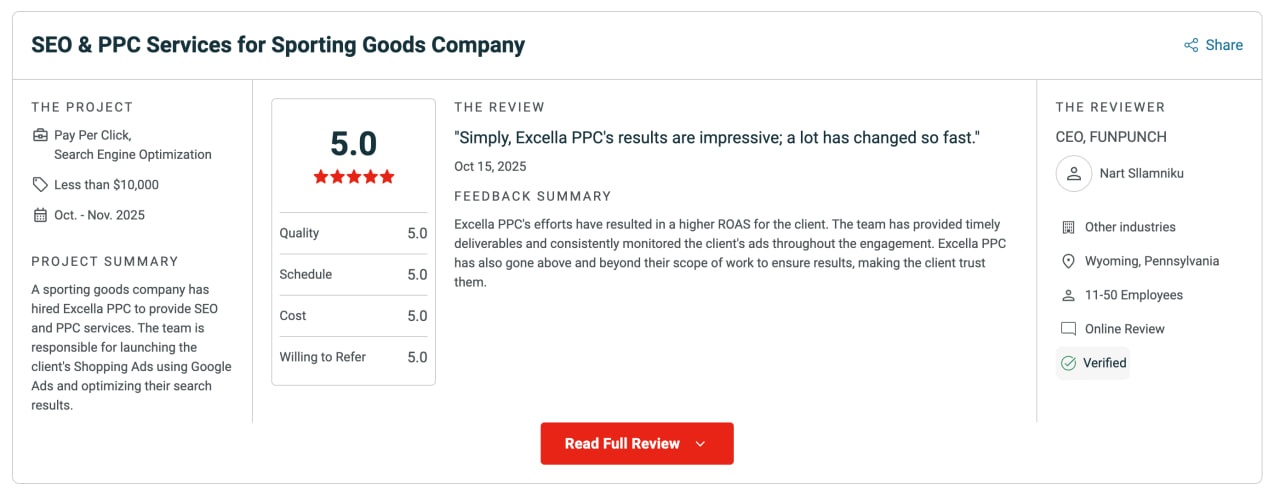
FunPunch is a Shopify ecommerce brand selling fitness and training products online. The mission was clear: scale purchases profitably, not just “spend more and hope.”
This was not a single-market setup. We ran Google Ads across multiple regions and managed campaigns for customers almost worldwide. To make that possible, the biggest work happened where most agencies barely look: Google Merchant Center.
FunPunch had strong products, but the account was not built for global e-commerce scale.
Key issues we identified:
- Merchant Center was treated like “one feed for everything,” which limited query matching and made troubleshooting difficult
- Kids and adults products were mixed, which diluted signals for Shopping and Performance Max
- Shipping and availability signals varied by market, creating performance swings and hidden disapprovals
- Performance Max was blending too much together, reducing control over what actually worked
- Brand vs non-brand performance was not cleanly separated, which hid true acquisition costs
To scale worldwide, we needed a system where feeds, markets, and product groups were controllable.
1) Google Merchant Center rebuild (foundation first)
Most ecommerce performance problems start in the feed. We treated Merchant Center as a performance lever, not a checkbox.
What we did in Merchant Center:
- Cleaned and standardized core attributes (titles, product type, Google product category, brand identifiers)
- Fixed issues that quietly block scale (mismatched pricing, availability inconsistencies, shipping-related problems, policy risk flags)
- Built a structure that allowed segmentation by product priority, margin tiers, and best sellers using custom labels
- Implemented feed rules/supplemental logic where needed to keep product data consistent and scalable
2) Separate feeds per country (global execution without chaos)
Running “almost worldwide” with one universal feed is a common trap. Different markets behave differently, and one blended feed makes every decision blurry.
We created separate feeds for each country so every market had:
- its own product availability and shipping logic
- cleaner reporting and budgeting by country
- faster scaling in winning countries without being dragged down by weaker ones
- easier troubleshooting when performance changed (market-level visibility instead of guessing)
3) Separate feeds for kids vs adults (clean signals, better matching)
Kids products and adult products attract different searches, different buyers, and different conversion behavior. Mixing them in the same feed and same campaign structure hurts relevance and learning.
We split feeds and structure into two clear segments:
- Kids feed (titles, categories, and intent aligned to parent searches)
- Adults feed (attributes aligned to adult fitness intent and product expectations)
This improved query relevance, reduced wasted clicks, and gave us cleaner performance insights by audience segment.
4) Shopping and Performance Max built around feed segmentation
Once feeds were structured correctly, campaign structure became much more predictable.
We:
- Segmented Performance Max by product group and intent (not one campaign for everything)
- Matched asset groups to specific product segments (kids vs adults, top categories)
- Controlled budget allocation so winners received scale and long-tail SKUs did not dilute spend
- Ran continuous search term reviews and exclusions to keep spend tight as volume grew
5) Search campaigns for high-intent capture and control
Search was used to capture demand Shopping misses and to keep acquisition measurable.
We:
- separated brand into its own campaign for clean reporting
- built non-brand around category intent and problem-solution queries
- expanded negatives weekly to remove irrelevant spend
- aligned landing pages by category to lift conversion rate
6) International scaling rules (profit-first expansion)
We scaled globally with rules, not emotion:
- prioritized top-performing countries first
- used market-level performance thresholds before increasing budgets
- cut or limited markets that did not meet unit economics quickly
- maintained stable performance while expanding reach almost worldwide
7) Demand Gen Campaigns for YouTube Shorts (top-of-funnel)
To scale beyond existing search demand we launched Demand Generation campaigns with a focus on YouTube Shorts.

After rebuild + scaling:
- Monthly spend: 2400% increase
- ROAS: 160% increase
- Google Ads revenue: 3900% increase
- International sales became a consistent portion of total purchases
What We Did Next
Once the foundation was stable, we moved into compounding improvements:
- expanded winning product groups into dedicated campaigns
- continued feed optimization by country and product segment
- tested new acquisition angles while protecting ROAS
- kept a weekly rhythm: feed checks, search term control, asset testing, market-level scaling decisions
If you’re running Google Ads for an ecommerce brand and feel you’re not getting the most from your ad spend, request an audit. We’ll identify what’s holding performance back and give you a clear plan to increase sales efficiency.

Free PPC Audit