Google Ads for Personal Injury Lawyers: What Actually Works in 2026
Let’s get one thing straight: Google Ads for personal injury lawyers isn’t “set up campaigns → get leads.”
That works in dentistry. It works in ecom. It even works in some boring B2B.
Personal injury? Different sport.
You’re buying the most expensive clicks on the internet from people having a bad day, in markets where five firms are willing to light money on fire just to show up above you.
So if you want this to work in 2026, you need a system built for one outcome: signed cases.
Why personal injury lawyer advertising is different from other legal niches
Most legal niches are predictable.
- Divorce: people research, compare, decide.
- Immigration: long consideration cycle.
- Estate planning: slow and orderly.
Personal injury is chaos. And your ads are competing inside that chaos.
Here’s what makes personal injury lawyer advertising brutal:
1) The “I need help now” window is tiny
Your best leads don’t browse for weeks. They search, call, pick someone, done. If your ads and landing page don’t make an instant “this is the firm” impression, you lose.
2) The auction is distorted by case value
One retained case can be worth five figures or more. That means your competitors can justify insane CPCs and still be fine… if their intake actually closes.
3) You’re not competing on clever copy — you’re competing on trust
Nobody hires the “most creative” lawyer. They hire the one who feels legitimate in 10 seconds:
- reviews
- local presence
- clear specialty
- confident answers
- fast response
4) Lead quality is a minefield
Wrong state. Wrong case type. No injury. At-fault. Insurance fishing. Tire-kickers. Spam forms.
A “lead” in personal injury can be a gold nugget… or a complete waste of your team’s time.
The takeaway: if your strategy is “get more leads,” you’re already losing. The goal is get the right calls and convert them into retained clients.
Leads vs signed cases: the KPI that matters for personal injury lead generation
Most agencies brag about CPL. It’s cute. It’s also useless.
Personal injury lead generation should be measured like this:
Cost per signed case = (ad spend + management) / retained clients
Everything else is a supporting metric.
Because in PI, you can have:
- $80 leads that never sign
- $300 leads that turn into a $40k case
What you should track instead (in order):
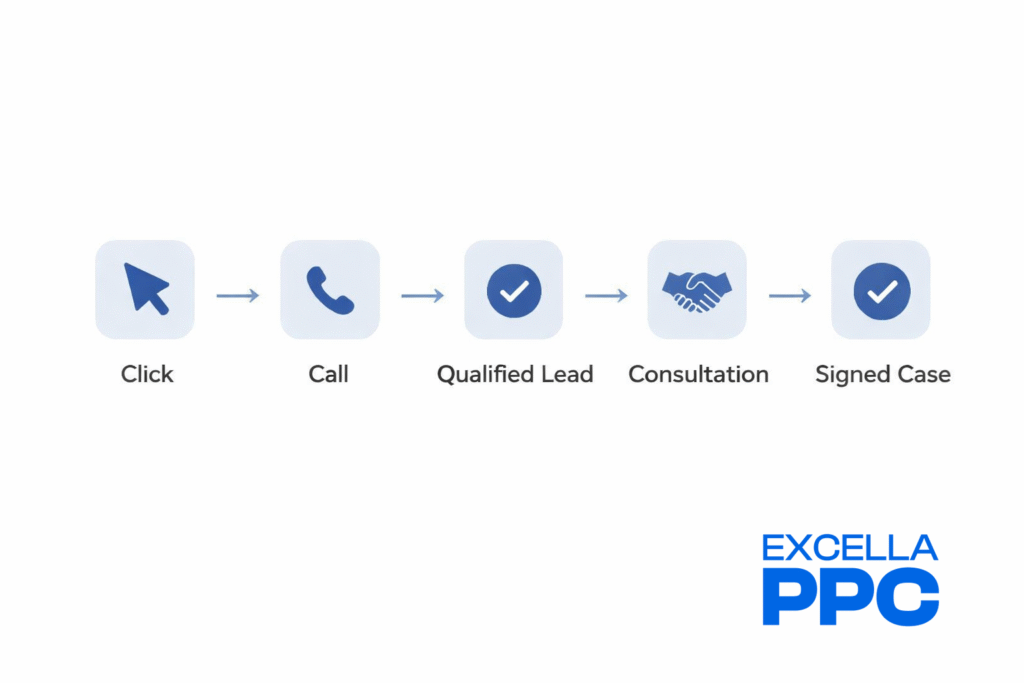
- Qualified calls (real injury + your jurisdiction + within your case criteria)
- Consultations booked
- Signed cases
- Cost per signed case
- Revenue per signed case (optional, but powerful)
Why most injury lawyer marketing campaigns fail (even with big budgets)
I’ve seen firms spend $50k/month and still complain “Google Ads doesn’t work.”
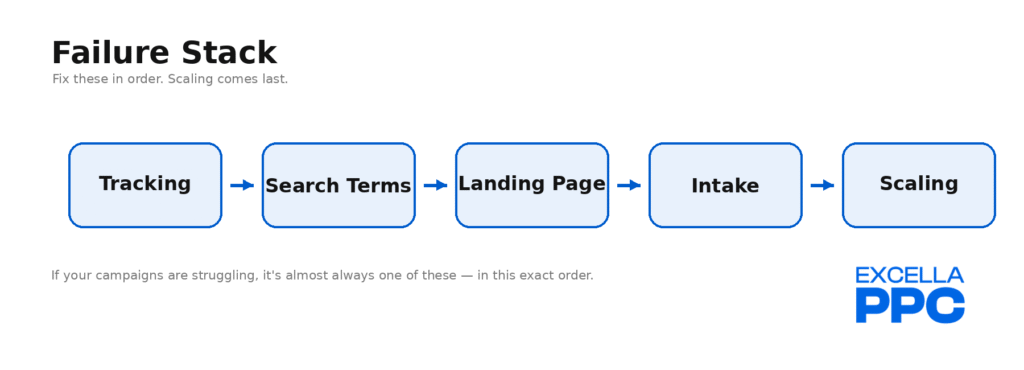
Here are the top failure reasons:
1) They optimize Google Ads for the wrong conversion
They track “thank you page views,” random form submits, or any call longer than 30 seconds.
Congrats — you just trained Google to find more junk.
2) They don’t control search terms aggressively
In personal injury, broad matching + lazy negatives = you pay for:
- “average settlement” research
- “what to do after accident” info seekers
- irrelevant legal questions
- people looking for free consultations with zero intent
3) Their landing page is generic law-firm wallpaper
Your page needs:
- clear case focus (what you handle / what you don’t)
- immediate trust signals (reviews, local proof)
- call-first layout
- fast mobile speed
- a reason to choose you now
4) Intake is slow or inconsistent
You can have the best ads in the market and still lose if:
- calls go unanswered
- response is slow
- staff can’t qualify properly
- follow-up is weak
In personal injury, speed is a weapon. Most firms don’t use it.
5) They scale before the foundation is ready
More budget doesn’t fix bad tracking, bad intake, or bad messaging.
It just helps you lose money faster.
Before You Spend: Personal Injury Law Firm Marketing Economics
Google Ads for personal injury lawyers can be a money printer.
It can also be the fastest way to burn $10k and learn nothing.
The difference isn’t “better ads.” It’s whether your economics and intake can actually convert demand into retained clients.
If you skip this section and jump straight into keywords, you’ll do what most firms do: buy expensive clicks and then blame Google for the mess that happens after the click.
The math: click → call → qualified lead → retained client
Here’s the uncomfortable truth about personal injury lawyer advertising:
You don’t need amazing click-through rates.
You need a system that can turn a small number of high-intent calls into signed cases.
So before you spend, run this simple funnel math.
Let’s say your market CPC is $60 (not crazy in PI).
You spend $15,000/month.
- Clicks: 15,000 / 60 = 250 clicks
- Call/Form rate: 12% → 30 leads (250 × 0.12)
- Qualified rate: 50% → 15 qualified (30 × 0.50)
- Consultations booked: 70% → 11 booked (15 × 0.70 = 10.5 → ~11)
- Show rate: 75% → 8 show (11 × 0.75 = 8.25 → ~8)
- Retained: 33% → 3 signed cases (8 × 0.33 = 2.64 → ~3)
So you just spent $15k for ~3 signed cases.
Now, if that cases is worth $40k+, you’re happy.
If your intake is slow and you retain 0… you’ll swear “Google Ads doesn’t work.”
When Google Ads is not the right first channel
This is where most marketers lie to you. I won’t.
There are times when Google Ads for personal injury lawyers is a bad first move.
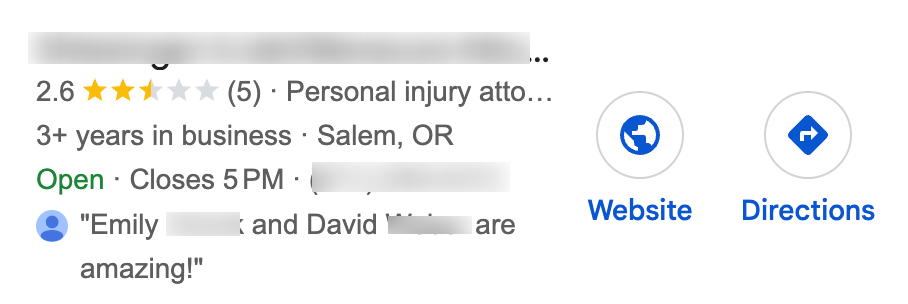
1) You have no review presence and your Google Business Profile is weak
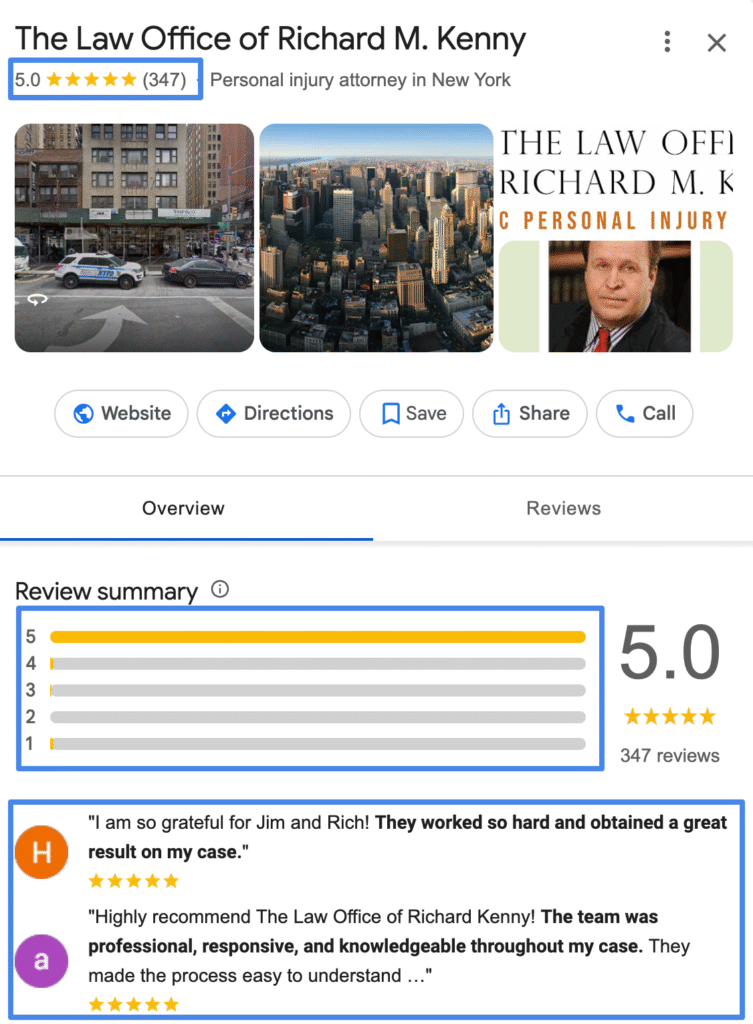
If your competitors have 300 reviews and you have just few, your conversion rate will suffer. You’ll pay the same CPC and get half the calls. Build credibility first.
2) You can’t answer calls consistently
If you miss calls, you’re donating your ad budget to the firms that pick up.
3) Your cash flow can’t survive the ramp-up
PI takes time. Even if you sign cases fast, settlement revenue doesn’t show up tomorrow. If the firm needs immediate cash return, you may need a different approach (or a smaller, tighter Google strategy first).
What to do instead (first channel options):
- Tight Local Services Ads + strong intake follow-up
- Google Business Profile + reviews + local SEO basics
- Hyper-focused Search campaign on one high-intent case type and one geo (small budget, high control)
Google Business Profile and Google Maps Ads for Personal Injury Lawyers
Google Ads for personal injury lawyers doesn’t live in a vacuum.
Even if you run the cleanest Search campaigns on Earth, people still do the same thing before they call:
They Google you. They look at reviews. They check location. They scan photos.
And if your Google Business Profile looks weak, you just paid $60–$300 for a click that goes straight into doubt.
This is why “personal injury lawyer advertising” is not just ads. It’s ads + trust layer.
How a strong Google Business Profile improves Google Ads performance
A strong Google Business Profile lowers your cost per signed case — without changing a single keyword.
Because it improves the two numbers that actually matter:
- Conversion rate (more people call)
- Lead quality (more people trust you and self-select correctly)
What a strong profile does for injury lawyer marketing:
- Makes your firm look real and local (not “some random landing page”)
- Builds instant credibility via reviews and owner responses
- Increases call-through from mobile users who prefer Maps/local results
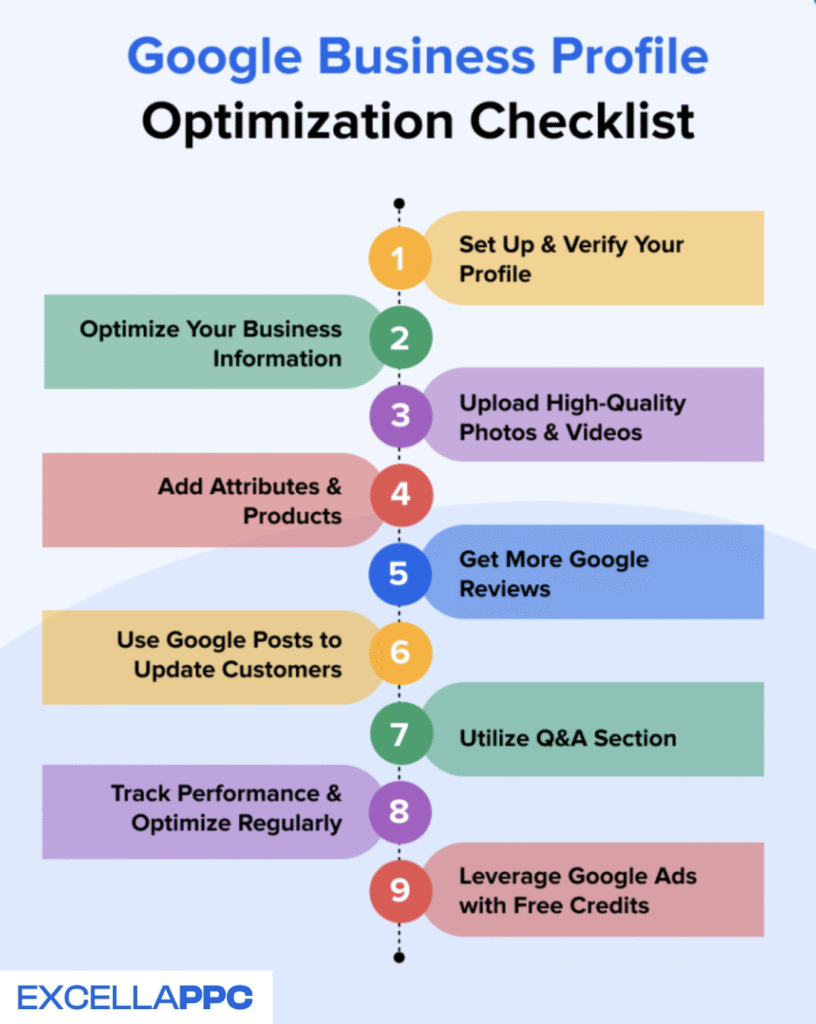
Google Business Profile optimization checklist (categories, services, photos, posts, Q&A)
This is the part you can hand to your team and tell them: “Do it this week.”
For more details, check Google’s official docs on Business Profile guidelines.
Tracking That Connects Google Ads Spend to Signed Personal Injury Cases
What to track for personal injury lead generation
Track 3 buckets (and don’t overcomplicate it):
- Calls (from ads + from your website)
- Forms (real submissions, not “thank-you page views”)
- Chats (only if your chat actually produces qualified consultations)
Call tracking done right
What “done right” looks like:
1) Dynamic Number Insertion (DNI) on the website
Paid traffic sees a tracking number. Everyone else sees your main number.
This keeps your marketing attribution clean without messing up your Google Business Profile.
CallRail is one of the cleanest tools for personal injury lead generation: dynamic numbers, source-level attribution, recordings, and repeat-caller logic in one place.
3) Listen to calls. Seriously.
Call listening tells you:
- which keywords bring actual injury cases
- which ads attract price shoppers / tire-kickers
- what intake is doing wrong
- what case types you’re accidentally attracting
Offline conversions: teaching Google what a “good case” is
Offline conversions = you telling Google what happened after the click:
- qualified lead
- consultation booked
- retained / signed case
When you import those outcomes back into Google Ads, you’re finally optimizing on truth.
How to do it without making it complicated:
- Capture the click ID (GCLID) with the lead
- Push lead status changes in your CRM (qualified → retained)
- Upload those conversions back into Google Ads on a schedule
Google’s official docs cover offline conversion imports using GCLID and the general offline import concept.
Recommended campaign structure for personal injury law firms
Here’s a structure that works in the real world. Not “theory,” not “Google’s best practices,” but something you can actually scale without losing your mind.
1) Brand Search (always separate)
- Protect your name from competitors bidding on you
- Measure branded demand vs paid-generated demand
- Cheapest conversions in the account (usually)
2) Non-brand Search (core acquisition)
Split ad groups by intent and case type. At minimum:
- Car Accident
- Truck Accident
- Motorcycle Accident (if you want it)
- Slip and Fall (often different quality)
- Near Me (to use correct ad copies)
- Keyword + Geo
- Separate campaign for each state/big city
Here is a a part of “non brand” campaign structure for our client .
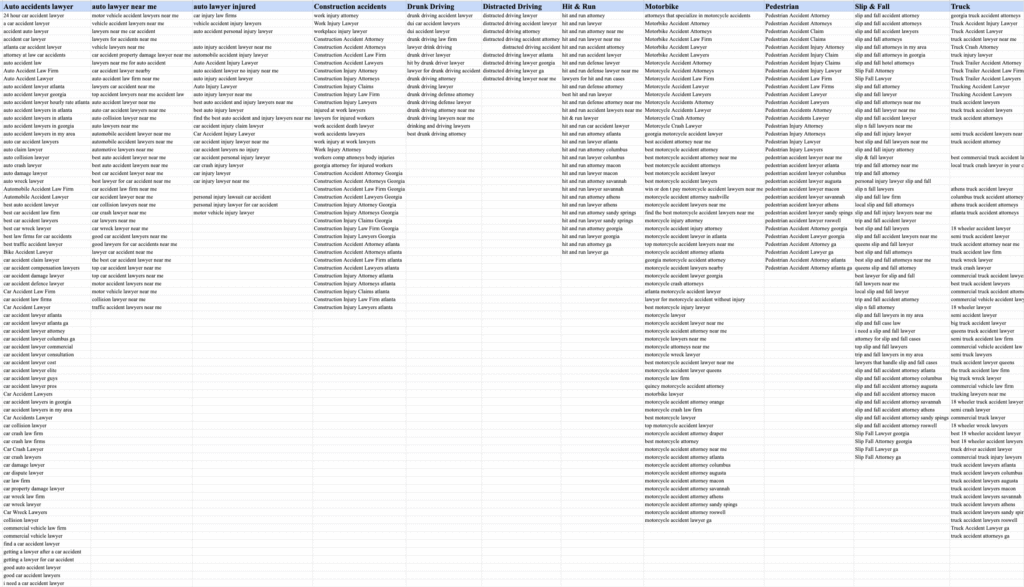
If you’re a smaller firm, start with one case type + one geo and earn the right to expand
3) Performance Max (only for proven accounts, not day 1)
Use PMax in personal injury only when:
- tracking is clean (qualified / retained signals)
- landing pages are strong
- GMB is strong.
Why account structure matters?
The point of structuring Google Ads for personal injury lawyers isn’t to look neat in the dashboard.
It’s to make the account more relevant, easier to read, and faster to improve.
1) Relevancy = higher Quality Score (and lower costs)
2) Easy to analyze (so you don’t guess)
3) More effective optimization (because changes are targeted)
Ad Copy That Converts for Personal Injury Attorney Advertising
Google Ads for personal injury lawyers is not a copywriting contest.
Nobody hires a lawyer because your headline was “clever.”
They call because, in 5 seconds, your ad answers three questions:
- Do you handle my situation?
- Can I trust you?
- What do I do next?
If your ad doesn’t do that, you’ll still get clicks.
They’ll just be the wrong clicks.
Headline Framework for Google Ads for Personal Injury Lawyers
Google often shows 2 headlines (sometimes 3, sometimes 1). So Headline 1 + Headline 2 are your money-makers. Headline 3 is still useful, but think of it as “bonus coverage.”
Headline 1 = Keyword relevancy + location (non-negotiable)
Goal: instant relevance. No creativity. No fluff.
Formats that work:
- Car Accident Lawyer in {City}
- Personal Injury Attorney Near {City}
- Truck Accident Lawyer {City}
- Injury Lawyer in {City}, {State}
- {City} Slip and Fall Lawyer
Rule: Case type + city beats generic “Personal Injury Lawyer” almost every time.
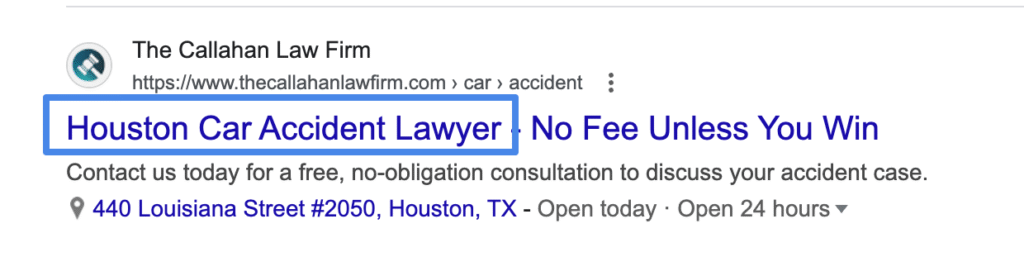
Headline 2 = Trust / why choose us (but keep it believable)
Goal: answer “why you?” without sounding like a billboard.
Fee structure
- No Fee Unless We Win
- You Pay Only If We Win
- No Upfront Fees
Reviews / social proof (only if true)
- 300+ 5-Star Reviews
- 4.9 Rated by Clients
Headline 3 = Action (simple, direct)
Goal: tell them what to do next.
Good examples:
- Get a Free Case Review
- Call for a Free Evaluation
- Get a Free Evaluation
- Speak to a Lawyer Now
Important: always pin your headlines, don’t let Google show text in a random order.
Landing Pages Built for Personal Injury Lead Generation
Google Ads can bring the right click.
Your landing page decides if that click turns into a qualified call… or a bounce.
Message match by case type and location
- One page per case type (car, truck, motorcycle, slip and fall)
- Location cues that are real: city/county, service area, local address (if you have it)
- Same words from the ad appear on the page (not rewritten into legal fluff)
Simple rule: the page should feel like the answer to the exact search.
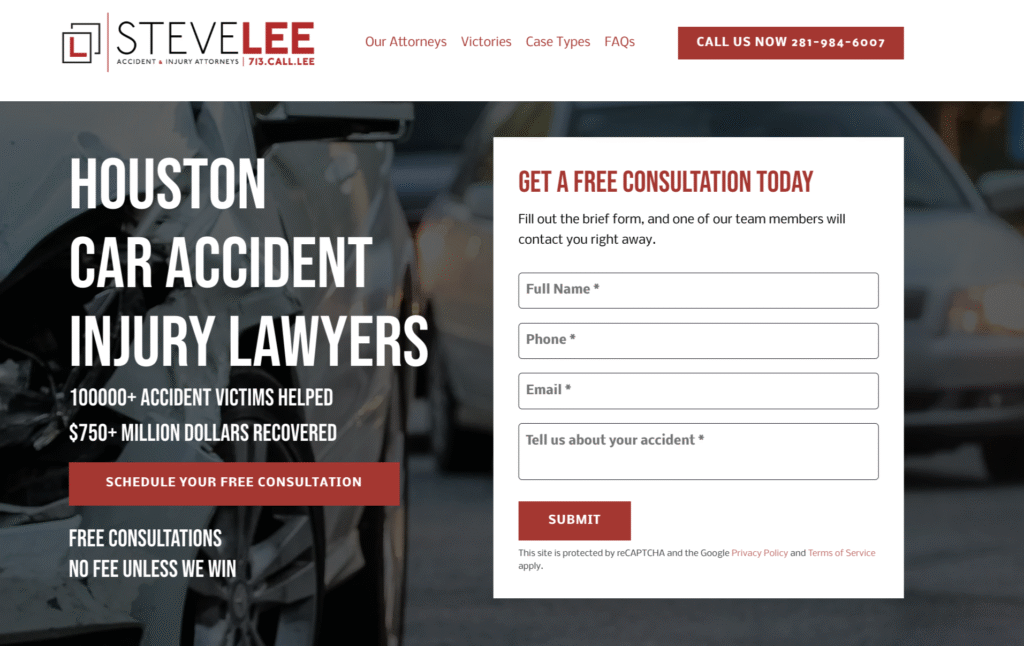
Trust signals: reviews, credentials, local proof, results
Use trust that’s specific and verifiable:
– Review widgets or screenshots (best if tied to Google)
– Bar admissions, associations, awards (real ones only)
– Local proof: office photos, team photos, map embed
– Case results (only if you can present them ethically and accurately)
Conversion UX: call-first design, speed, short forms
Your best lead is often on a phone, stressed, and ready to call.
Make calling effortless:
- Sticky call button on mobile
- Phone number above the fold (not hidden in the footer)
- One primary CTA (call). One secondary CTA (form)
Smart friction to reduce junk leads without killing volume
You don’t want more leads. You want better cases.
Add light friction that filters junk without scaring off real injuries:
- Dropdown: “Type of accident” (car, truck, slip and fall, other)
- Location confirmation: “Where did it happen?”
- Optional qualifier: “Were you injured?” (Yes/No)
- If you don’t handle certain cases, say it clearly (“We don’t handle workers’ comp” etc.)
Checklists
Google Ads launch checklist for personal injury lawyers
- Separate Brand and Non-brand campaigns
- Build campaigns by case type and location (not “one campaign for everything”)
- Use Exact to start (Broad only later)
- Add a real negative keyword base (settlement, salary, jobs, definition, reddit, etc.)
- Set call-focused ads and connect location assets (GBP)
- Create a case-type landing page (not generic PI homepage)
- Set ad schedule to match when intake answers
- Confirm intake can respond fast (missed call process included)
- Launch with a budget you can sustain for learning, not a 3-day test
Tracking checklist
- Track calls, forms, chats (but don’t treat them equally)
- Enable dynamic number insertion and record calls (where legal)
- Count unique callers (don’t double-count repeats)
- Mark “Primary” conversions as qualified leads (not every lead)
- Pass lead data into a CRM with stages: lead → qualified → consult → signed
- Import offline conversions (qualified and signed cases) back into Google
- Audit conversions monthly: remove junk events (page views, button clicks, etc.)
- Review call recordings weekly to spot keyword/ad junk and intake issues
FAQ
Does Google Ads work for personal injury lawyers?
Yes – if you track and optimize for signed cases, not random leads. Search + strong intake + clean tracking is the winning combo. If your intake is slow or your tracking is “anything counts as a conversion,” it will look like it doesn’t work.
Use Phrase or Broad match keywords for accident lawyers?
Start with Exact to control quality. Add Phrase only after you have a solid negative keyword system and clean conversion signals (ideally qualified leads / offline conversions). Broad = junk leads.
What bid strategy is the best for injury lawyer advertising?
Start with Manual CPC and increase your bids gradually while watching the search terms report and adding negatives until you collect enough conversion data. Once conversions are consistent, move to Target CPA with a Max CPC limit. If you can import qualified/retained outcomes, automated bidding becomes much smarter.
How to choose a personal injury marketing agency?
Pick the agency that starts with your business and intake, asks smart questions, and does a deep audit without promising results upfront—and actually understands the personal injury industry.
How much should a personal injury lawyer spend on Google Ads?
It depends on your target location and your operational capacity per month (how many calls you can answer, qualify, and follow up on). But for competitive personal injury markets, a realistic starting point is at least $7k–$10k/month if you want enough volume to learn, optimize, and generate signed cases.
Google Ads for personal injury lawyers can bring you cases fast, but only if you treat it like a system: clean structure, real tracking, strong Google Business Profile, and an intake process that actually closes. If you want us to review your setup and tell you exactly what to fix first, contact us.
We also wrote a practical guide on how to choose a Google Ads agency, so you don’t waste money on the wrong team.