What’s Different About Performance Marketing in 2026 for Ecommerce
Running an ecommerce store in 2026 feels like this.
You increase budget, results do not scale the way they used to. One channel “takes credit” for sales that would have happened anyway. Another channel looks dead until you fix tracking, then suddenly it becomes profitable.
That’s not because performance marketing is broken. It’s because the platforms changed how they find buyers, how they report conversions, and how much control you actually have.
These ecommerce advertising trends 2026 are the shifts that matter if your goal is simple: profitable growth across paid channels.
This guide is channel-based and practical. You’ll see what changed in:
- Tracking
- Google Ads
- Microsoft Ads
- Meta
- TikTok
- X Ads
And you’ll get a checklist you can use this week.
Conversion Tracking in 2026: what to fix before you touch budgets
If tracking is weak, the algorithms learn the wrong lessons. Then you end up “optimizing” creatives, landing pages, and bids while the system is basically guessing.
1) Consent Mode and consent signals matter more than most stores realize.
Google’s consent setup is no longer a side task. In Consent Mode, Google distinguishes consent types like ad_user_data and ad_personalization, and they influence measurement use cases.
What this means in practice: you can still run ads, but the machine has less reliable feedback. If your consent implementation is messy, reporting and bidding quality often degrade quietly.
2) Enhanced Conversions is one of the highest impact “boring” upgrades.
Google’s Enhanced Conversions supplements conversion tracking by sending hashed first-party data (like email) in a privacy-safe way to improve measurement and bidding.
If your store is scaling, Enhanced Conversions is usually worth doing early because it improves both reporting and algorithm training.
3) Server-side events are becoming the baseline.
Platform pixels alone are not enough anymore. Every major platform is pushing server-to-server connections:
X Conversion API is described as a server-to-server measurement solution that can complement the X Pixel.
Meta Conversions API creates a direct connection between your marketing data and Meta’s optimization systems.
TikTok Events API is a secure server-to-server interface and TikTok recommends using it together with the Pixel for web conversions, with deduplication.
Google Advertising Trends in 2026: the biggest changes for ecommerce
In Google Ads, the biggest Ecommerce Trends 2026 are AI Mode placements, new offer formats, and more automation around intent.
1) Ads inside AI Search experiences are real now
Google has official documentation for Ads in AI Overviews, including where they can show and what campaign types are eligible.
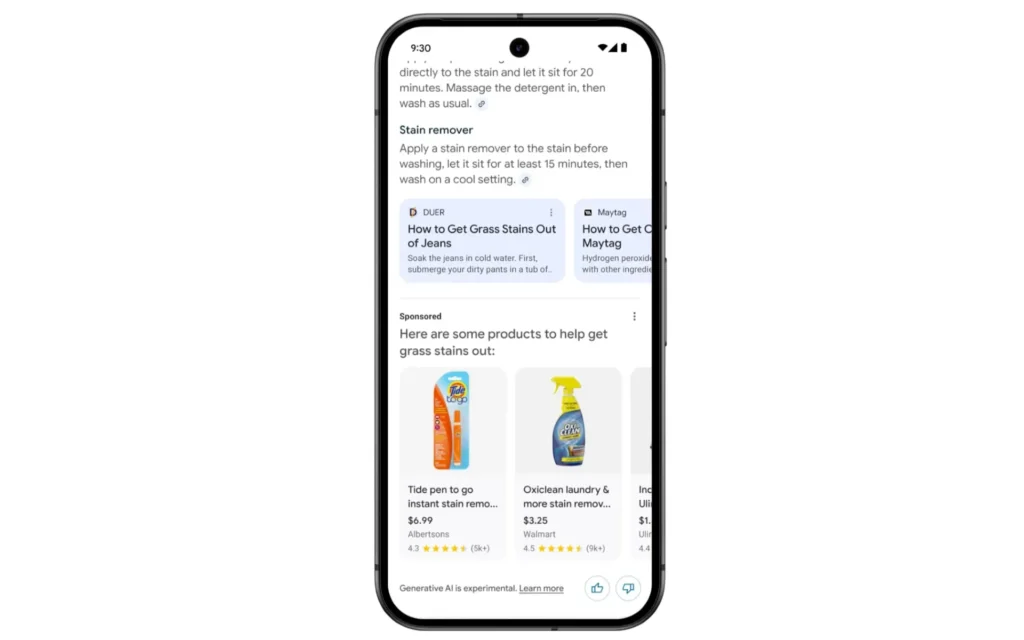
What this changes for ecommerce:
- More searches become “research journeys” and comparison journeys.
- Eligibility and performance increasingly reward advertisers who have strong conversion signals and strong product data.
If yourм account is built around tight exact-match thinking from five years ago, 2026 will punish you.
We wrote an article that explains AI Mode in more detail and what you need to do to get your ads to show there.
2) AI Max for Search is a clear direction of travel
Google describes AI Max as a suite of targeting and creative features, including search term matching and asset optimization.
Google is shifting Search from “you choose the exact query” to “you define the goal and constraints.”
This does not mean “turn everything on and pray.”
It means:
- Let the system explore, then judge it on profit, not on feelings.
- Put proper conversion tracking and value rules in place.
- Keep business guardrails (negatives, landing page rules, margin logic).
- Let the system explore, then judge it on profit, not on feelings.
At Excella PPC agency, we’re already actively using AI Max settings together with brand lists for competitor-focused campaigns. These campaigns have delivered a much stronger ROAS compared to standard competitor search campaigns.
3) Shopify + Google AI Mode
Shopify launched the Universal Commerce Protocol (UCP), co-developed with Google, to enable “agentic commerce” at scale. The idea is simple: Shopify merchants will be able to sell directly inside Google AI Mode in Search and the Gemini app. UCP supports real checkout flows in chat, including discount codes, loyalty credentials, and subscriptions.
Microsoft Ads in 2026: the “quiet channel” more ecommerce brands are adding
A few years ago, many ecommerce stores treated Microsoft Ads as “optional.” In 2026, more brands are adding it for one simple reason: it brings incremental buyers without rebuilding everything from scratch.
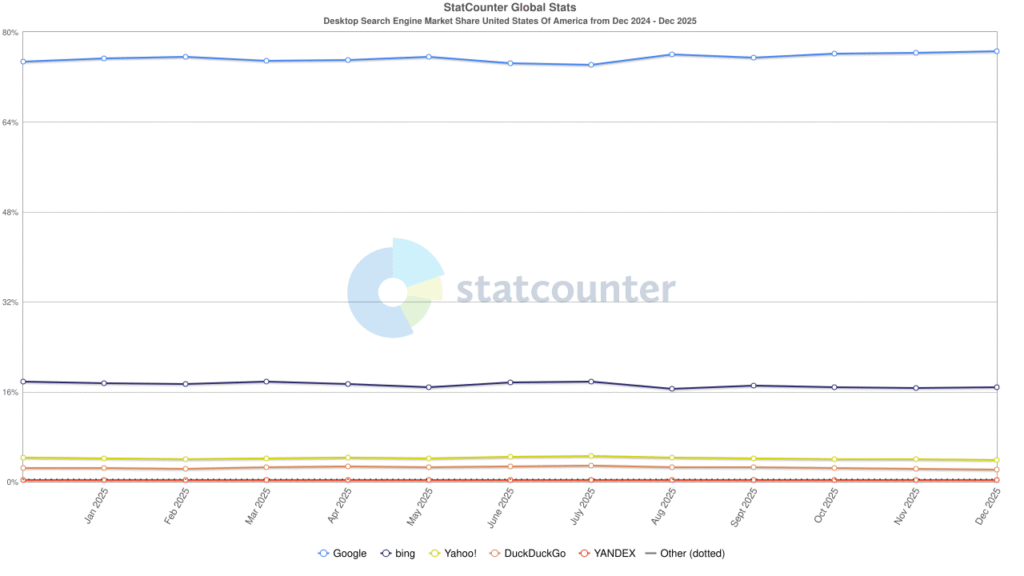
1) Real search volume exists outside Google, especially on desktop
Bing’s share on desktop is not small. StatCounter shows Bing sitting around the high single digits to low double digits on worldwide desktop search, depending on the period. That’s meaningful incremental demand.
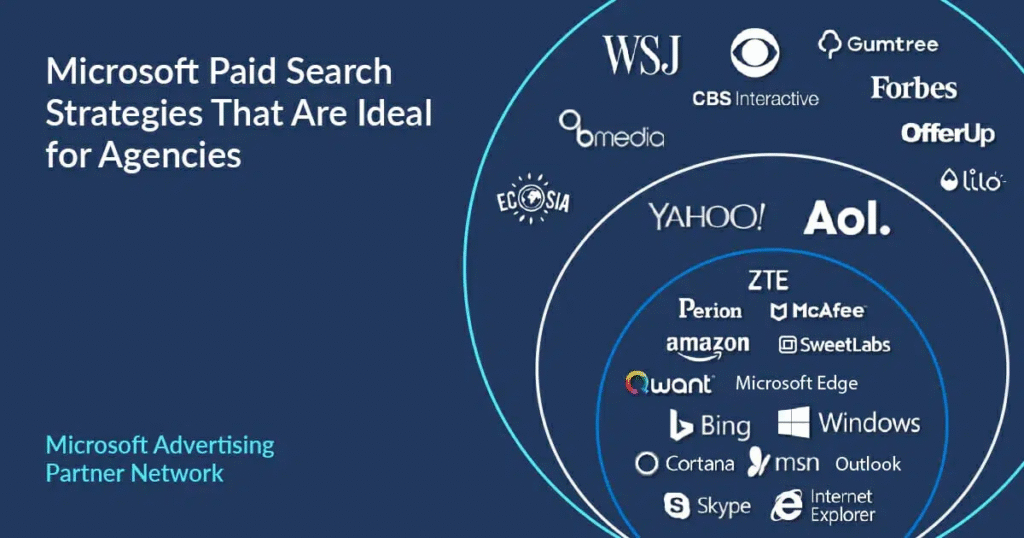
2) “Microsoft Ads” is not only Bing
Your ads can show across the Microsoft Advertising Network, including Bing and partner search engines and sites like Yahoo, plus other partners. Microsoft lists placements such as Bing, AOL, Yahoo, DuckDuckGo, Ecosia, and more partners.
3) Microsoft has ecommerce-native products, not just text ads
If you sell products, Microsoft Shopping campaigns are a direct fit. Microsoft also has Performance Max as an AI-powered campaign type across Microsoft inventory.
4) Less competition pressure makes Microsoft Ads a valuable ecommerce trend.
Microsoft often has fewer advertisers competing head-to-head, which can translate into efficient CPCs and incremental ROAS.
By the way, if you decide to test Microsoft Ads for your Shopify store, we have a practical guide on how to set up conversion tracking properly.
Meta in 2026: creative and signal quality beat audience tricks
Meta is still a must-have for DTC in 2026. It’s one of the best channels for scaling offers you’ve already proven. The only catch: the rules changed. That shift is a core part of eCommerce advertising trends this year.
1) Andromeda is the quiet reason Meta feels different.
Meta’s engineering team describes Andromeda as a personalized ads retrieval engine designed to improve efficiency and performance in the ads retrieval stage.
Translation for store owners:
- Meta is leaning harder into AI-driven matching.
- Hand-built interest stacks are less of a “cheat code.”
- Your advantage becomes what you feed the system: creative variety and clean conversion signals.
2) Advantage+ is basically the default direction.
For sales-focused campaigns, Advantage+ is now the default setup in Meta. In a lot of accounts, you can’t fully revert to the “classic” manual approach, which means you need to build your strategy around the new rules.
Meta is becoming less about targeting and more about:
- offer clarity
- creative volume
- creative angles
- signal quality
TikTok in 2026: automation plus native creative, especially for Shop
TikTok Shop is turning the app into a buying environment. That changes the intent level of users. People are not only discovering products, they’re getting used to purchasing inside the platform.
For DTC, this creates a new layer of demand that doesn’t look like classic search intent.
Smart+ pushes TikTok toward “one campaign, AI does the rest”
TikTok describes Smart+ Campaigns as AI-powered campaigns that automate campaign setup, audience targeting, optimization, and creative delivery.
The win for owners:
- Less time in Ads Manager
- More focus on creative, offer, landing page
The risk: It can feel like a black box if tracking is weak or creative is generic.
X Ads in 2026: not for everyone, but worth testing in the right cases
X is not the default ecommerce growth engine. But it can work when:
– your product has community energy (tech, creator, finance-adjacent, niche hobbies)
– you do launches and drops
– you already have demand and want extra reach and retargeting
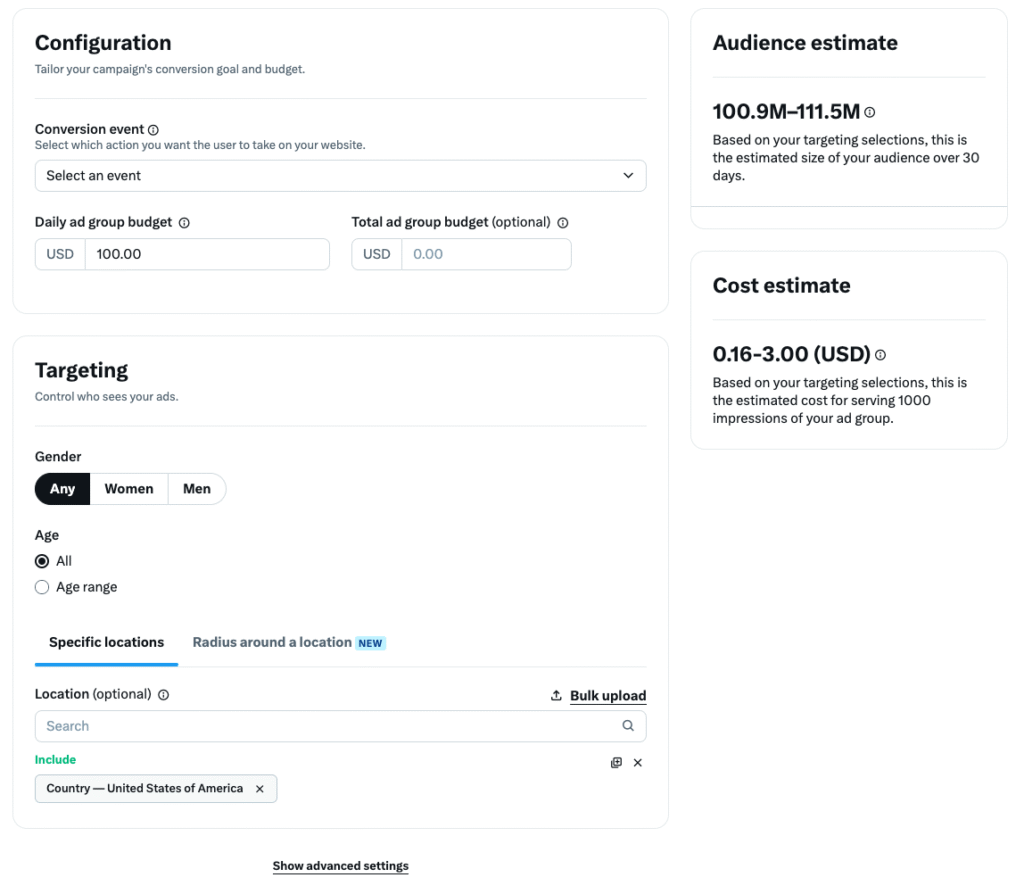
X Ads is leaning harder into performance in 2026.
- Simplified Sales campaign setup (conversion event + budget + basic demo targeting)
- Optimized Targeting is on by default (AI expands reach for better ROI)
- Reported beta lift: +10% CTR, +16% conversion rate
- CPM estimate tool added for planning
more info here
Conclusion:
Yes, we’re losing control. That’s the direction. More AI, more automation, more black boxes.
But it doesn’t mean performance marketing is dead. It just means the game changed.
What is negotiable is how you respond to the Ecommerce Advertising Trends 2026 are showing us: cleaner tracking, faster testing, better inputs for the algorithms, and tighter business rules around profit. The brands that win aren’t the ones looking for secret settings. They’re the ones who stay up to date, adapt quickly, and treat paid media like a system, not a one-time setup.
If you want a clear performance plan tailored to your margins, your tracking, and your channel mix, that’s what we do at Excella PPC agency.